
Coercive Control in Family Courts in Australia and New Zealand: Best Interests and Parenting Decisions
Coercive control is increasingly recognised in family court proceedings across Australia and Aotearoa New Zealand as a critical factor in parenting decisions. Courts are required to assess patterns of domestic and family violence—not just isolated incidents—when determining the best interests of the child.
Under the Family Law Act (Australia) and the Care of Children Act (New Zealand), judicial decision-making must prioritise child safety and consider the full impact of family violence. This includes coercive control as a pattern of behaviour that affects parenting capacity, child wellbeing, and the conditions under which parenting occurs.
Here we outline how coercive control is assessed in family court, the limitations of incident-based analysis, and how structured, behaviour-led frameworks support clearer and more consistent best interest determinations.
What Is Coercive Control in Family Court?
Coercive control in family court refers to a pattern of behaviours used by one parent to dominate, intimidate, or control the other parent. These behaviours often extend beyond physical violence and can include financial control, surveillance, legal system misuse, and interference with parenting.
Courts must assess how these patterns affect:
Parenting capacity
The safety and stability of the child
The functioning of the family over time

The System-Level Problem in Coercive Control Family Court Cases
Family courts across Australia and Aotearoa New Zealand are increasingly required to assess coercive control as patterned conduct, rather than isolated events.
However, many court materials still rely heavily on:
Incident summaries
Competing affidavits
“High conflict” framing
Program completion certificates presented as evidence of change
This creates a structural problem.
When coercive control is not analysed as a behavioural pattern linked to parenting capacity, decision-making can become overly dependent on competing narratives rather than observable conduct.
The difference between an incident-based approach and a behaviour-based analysis is not just technical—it directly shapes outcomes for children.
| Practice Pattern | System Consequence |
|---|---|
| Incident-only framing | Escalation and cumulative harm remain under-examined |
| Mutualising language ("conflict") | Accountability becomes blurred |
| Over-focus on survivor behaviour | Harm is misattributed |
| Program attendance treated as "change" | Parenting capacity remains untested |
| Narrow child impact assessment | Functional harm is under-weighted |
Why Behavioural Pattern Analysis Matters in Coercive Control Cases
Coercive control rarely presents as a single identifiable act. It is most often visible through patterns of behaviour over time, embedded within everyday parenting dynamics.
In family court contexts, this may include:
Administrative requests that function as surveillance
Procedural disputes that operate as harassment
Litigation conduct that maintains pressure, exhaustion, or proximity
A structured behavioural analysis supports courts in moving beyond surface-level interpretation.
It asks:
What is the pattern of conduct over time?
How does this behaviour affect parenting capacity and co-parenting conditions?
What conditions are created for the child and the other parent?
What is the cumulative impact on child safety and emotional wellbeing?
This approach aligns with statutory obligations in both Australia and New Zealand, strengthening best interest determinations without presuming outcomes regarding contact or residence.
Shared Parenting and Safety in Domestic Violence Cases

In family court proceedings, shared parenting is often treated as a neutral or default principle.
In cases involving coercive control, however, shared parenting arrangements can become a pathway for continued abuse.
This may include:
Using handovers as opportunities for intimidation
Weaponising communication tools to harass or monitor
Withholding consent for education or medical decisions
Maintaining financial control through parenting disputes
A behaviour-based framework reframes the issue: Shared parenting is contingent on demonstrated safe parenting behaviour—not assumed as an abstract entitlement.
This supports clear, neutral judicial reasoning grounded in observable conduct.
Assessing Parenting Capacity and Behavioural Change
Family courts must distinguish between assertions of change and demonstrated parenting capacity.
Claims of change are often supported by:
Program completion certificates
Generalised statements of insight
Assertions of “moving on”
Indicators of social or financial stability
However, parenting decisions require behavioural evidence.
A structured assessment asks:
Has the parent acknowledged specific behaviours, not general traits?
Has the impact on the child been clearly identified?
Has interference with the other parent’s caregiving ceased?
Is behaviour consistent over time and under stress?
Are boundaries respected without reinterpretation?
Do family members report increased safety?
Distinguishing Behaviour Change From Repair
Ending abusive behaviour is not the same as repairing harm.
Courts must also consider whether:
Harm has been acknowledged
Behavioural change is sustained
Parenting conduct actively increases the child’s sense of safety
This supports staged decision-making, where progress is evaluated through observable behaviour—not assumed through program participation or statements of intent.
How Coercive Control Impacts Children in Family Court
In family court, the impact of coercive control on children is often indirect, cumulative, and embedded in daily life—rather than confined to discrete incidents.
For this reason, assessment must focus on how parental behaviour shapes the child’s lived environment over time.
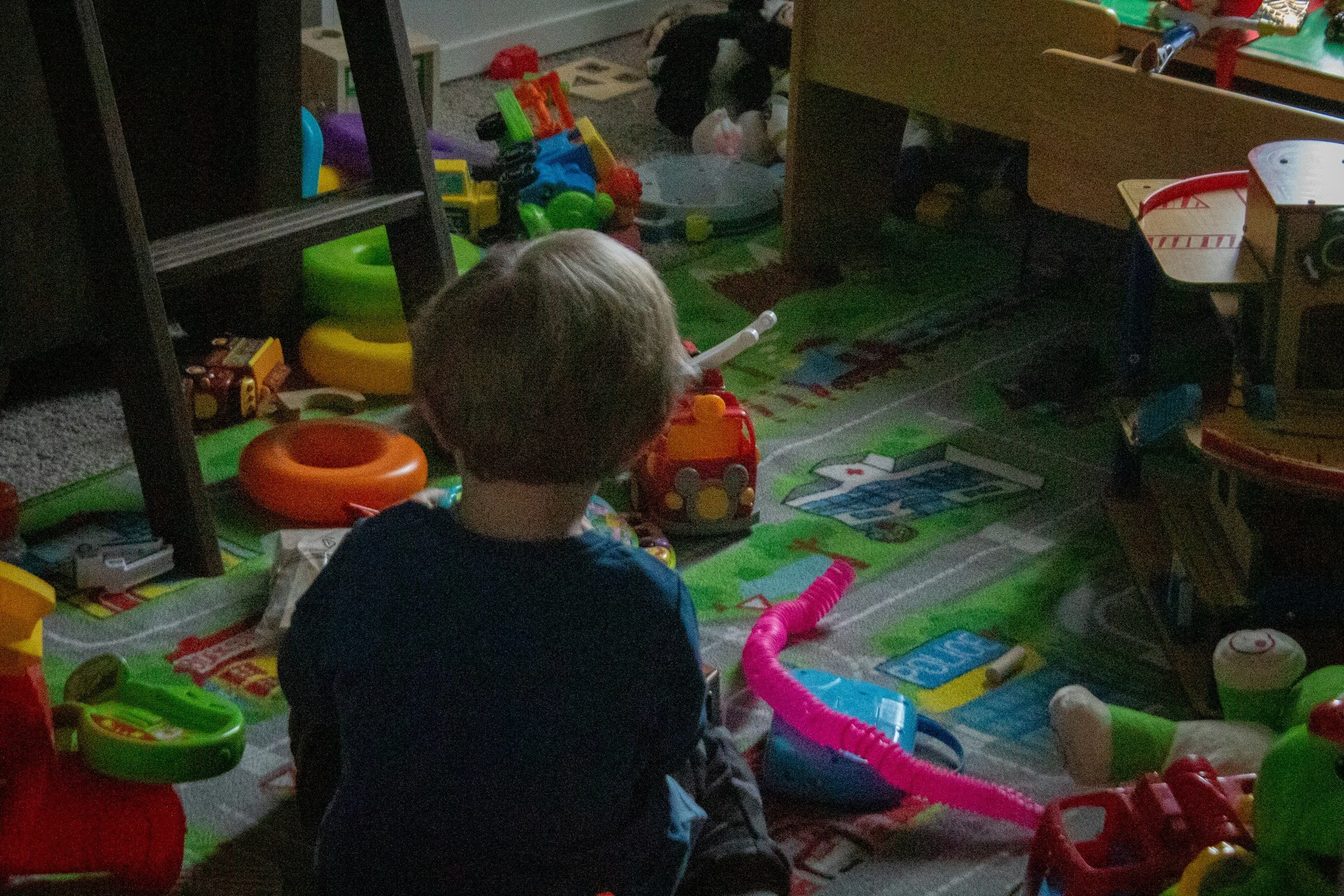
Children may experience harm through:
Instability in living conditions due to financial control or forced movement
Disruption to schooling and routines, including attendance, concentration, and continuity
Erosion of the protective parent’s authority, affecting structure and emotional security
Chronic stress linked to ongoing proceedings, surveillance, or conflict exposure
These impacts may not always present as immediate safety concerns, but they can significantly affect:
Emotional regulation
Sense of safety
Attachment stability
Developmental outcomes
A structured behavioural analysis helps courts connect:
Patterns of parental conduct
To changes in family functioning
And to the child’s day-to-day experience
This supports more precise findings about how coercive control affects children—without relying solely on incident-based evidence.
Systems Abuse in Family Court Contexts
Systems abuse refers to the use of legal and administrative processes to continue coercive control.
In family court, this may include:
Repeated applications and re-litigation
Strategic delay or non-compliance
Use of “parental alienation” claims to discredit protective parenting
Forcing unnecessary contact through procedural disputes
Without structured analysis, these behaviours can appear legitimate.
A pattern-based approach helps courts distinguish:
Genuine parenting disputes
From litigation functioning as coercive control
This supports both fairness and analytical clarity.

Why the Safe & Together Model Supports Family Court Analysis
The Safe & Together Model provides a structured, behaviour-based framework for analysing coercive control in parenting matters.
It is not:
A therapeutic intervention
An advocacy position
A presumption against contact
A replacement for judicial discretion
Instead, it supports courts by:
Centring the perpetrator as a parent
Linking behaviour to child and family outcomes
Making survivor protective actions visible
Supporting consistent documentation
Clarifying parenting expectations
The Model strengthens analysis—without directing judicial outcomes.
Safe & Together Model Principles
Keep child safe and together with non-offending parent
Partner with non-offending parent as default position
Intervene with perpetrator to reduce risk and harm to child
See how the Safe & Together Model shifts family court practice from incident-based analysis to behaviour-led systems reform.
Engagement with the Federal Circuit and Family Court of Australia (FCFCOA)
Since 2020, the Safe & Together Model has been introduced within the Federal Circuit and Family Court of Australia (FCFCOA) through professional development initiatives.
This work has focused on:
Strengthening behavioural analysis of coercive control
Clarifying links between parental conduct and child impact
Supporting structured judicial reasoning
Developing shared language across court-affiliated roles
The Model supports analytical clarity while preserving full judicial independence.
Strengthen Coercive Control Analysis in Your Court
Improving coercive control analysis requires structured approaches, shared language, and consistent application.
Family court leaders across Australia and Aotearoa New Zealand can:
Embed behaviour-based analysis across roles
Align report templates with pattern-based frameworks
Strengthen identification of systems abuse
Clarify parenting expectations in staged decision-making
Family law outcomes are strengthened when coercive control is assessed as patterned parenting behaviour—not isolated allegations. Talk with our team about embedding Safe & Together in your court.
FAQs
-
Coercive control should be analysed as a pattern of behaviour over time, rather than as isolated incidents. Effective analysis links parental conduct to parenting capacity, co-parenting conditions, and the child’s lived experience. This supports clearer, more consistent best interest determinations and strengthens judicial reasoning.
-
A behaviour-based approach supports statutory obligations under the Family Law Act (Australia) and the Care of Children Act (New Zealand) by focusing on child safety, parenting capacity, and the impact of family violence. It strengthens how courts apply best interest principles without presuming specific outcomes regarding contact or residence.
-
Incident-based assessment can miss escalation, cumulative harm, and patterns of control. It may also lead to mutualising language such as “conflict,” which can obscure accountability. A pattern-based approach provides a more accurate foundation for assessing risk, parenting capacity, and child impact.
-
Courts must look beyond program completion or general statements of insight and assess whether:
Specific behaviours have changed
Harm has been acknowledged
Parenting conduct supports the child’s safety and stability
Behaviour remains consistent over time
This ensures decisions are grounded in observable evidence of parenting capacity.
-
Consistency can be strengthened by:
Using shared behavioural frameworks across judicial officers, report writers, and practitioners
Aligning documentation and reporting practices
Focusing on patterns of conduct rather than competing narratives
Linking parental behaviour directly to child impact
This supports more coherent reasoning and reduces variability across cases.
-
The Safe & Together Model is a behaviour-based framework used to support analysis of coercive control in parenting matters. It focuses on identifying patterns of perpetrator behaviour, the impact on children and family functioning, and the protective actions of the non-offending parent.
In family court contexts, the Model is used to:
Support structured and consistent analysis
Clarify links between parental conduct and child impact
Strengthen documentation and reasoning across roles
It does not prescribe outcomes regarding contact or residence and does not replace judicial discretion. Instead, it supports courts in applying existing legal frameworks with greater analytical clarity.