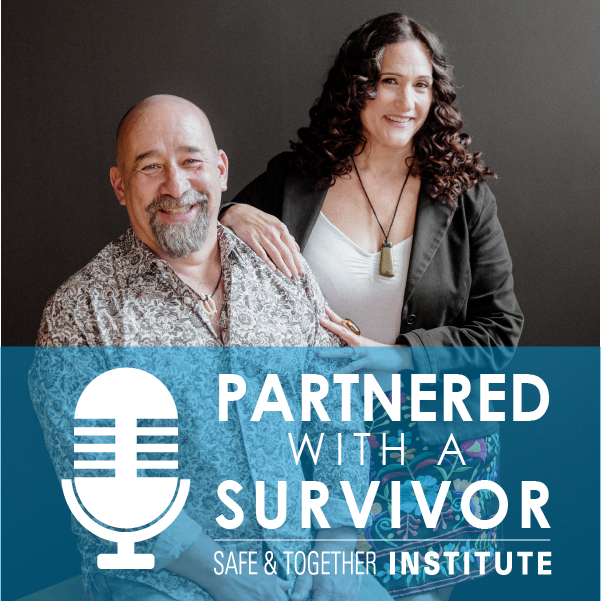
Partnered with a Survivor Podcast

Partnered with a Survivor is a professional-focused podcast created and produced by Ruth Reymundo and hosted by the Safe & Together Institute. What began as intimate conversations between Ruth and David Mandel—founder of the Institute and creator of the Safe & Together Model—about violence, relationships, abuse, and the systems that respond to them has grown into a global conversation about systems and culture change.
Hosted by Ruth and co-hosted by David, the podcast features in-depth, professionally grounded discussions about how institutions respond to domestic abuse, gender-based violence, and child maltreatment. Many episodes also feature global leaders working across fields such as child safety, men and masculinity, perpetrator accountability, fatherhood, and partnering with survivors.
Together, these conversations examine how systems often fail adult and child survivors, how societal narratives about masculinity and violence shape professional practice, and how intersectional realities—including cultural and religious beliefs, racialised identities, LGBTQ+ experiences, immigration status, disability, and other structural vulnerabilities—shape responses to abuse and violence.
The podcast offers an insider lens into how professionals navigate systems not only as practitioners, but also as parents and partners. Through candid dialogue and critical reflection, Ruth and David challenge the assumptions and structures that limit meaningful accountability, safety, and healing. The goal is collective movement across systems, cultures, and families toward greater safety, nurturance, and sustained change.
Disclaimer: Episodes contain sensitive topics and occasional mature language that may be difficult for some listeners. The views and opinions expressed by podcast guests are their own and do not necessarily reflect those of the Safe & Together Institute or its staff.
Check Out All of Our Episodes

Season 6 Episode 7: Every Man: A Candid Conversation on Male Violence and Social Change with Jackson Katz
What if ending violence against women isn’t just about asking men to stop bad behavior but also inviting them to embrace a more meaningful definition of strength and leadership? This question forms the heart of our powerful conversation with Jackson Katz, Ph.D., one of the world’s foremost male voices in the movement to prevent gender-based violence.
Season 6 Episode 6: Broken Blue Line: Confronting Officer-Perpetrated Domestic Violence
When Bruce Bieber's phone rang at 2:50 a.m., his world shattered. Three deputies stood at his door with news that his daughter Abby, a dedicated police officer known for her compassion and professionalism, had been murdered by her boyfriend—a fellow officer with a documented history of domestic violence that had been systematically minimized by their department. This powerful conversation exposes the deadly consequences of law enforcement’s failure to address domestic violence within their ranks.
Season 6 Episode 5: Coercive Control & Children 2025: Conference Insights from Melbourne
David and Ruth share highlights from the 2025 Safe & Together Asia Pacific Coercive Control & Children’s Conference in Melbourne, Australia. Listen in as they reflect on key moments and the impact of bringing together over 400 practitioners from across the region.
Season 6 Episode 4: The Paradox of Proximity: Understanding Domestic Abuse in Rural and Remote Communities
In this episode, David and Ruth speak with Dr. Anni Donaldson about her groundbreaking research examining domestic abuse in Scotland’s rural, remote, and island communities.

Season 6 Episode 3: Rethinking Gender-Based Violence Prevention: A Call to Action with Jess Hill and Michael Salter
In this episode, David and Ruth speak with Australian experts Jess Hill and Professor Michael Salter about their groundbreaking paper challenging current approaches to preventing gender-based violence. With Australia’s commitment to end gender-based violence within a generation, yet concerning increases in sexual violence and domestic homicides, this timely discussion explores why traditional prevention strategies focused on changing social norms and attitudes have fallen short.

Season 6 Episode 2: Coercive Control and Children
In this episode, David and Ruth explore why coercive control must be at the center of how we understand the impact of domestic abuse on children. Moving beyond just focusing on physical violence or whether children “witnessed” abuse, they discuss how perpetrators’ patterns of behavior can devastate children’s well-being in multiple ways.

Season 6 Episode 1: “Just Leave”: Examining Displacement-Based Responses to Domestic Violence
In this thought-provoking first episode of 2025, David and Ruth explore how displacement-based responses to domestic violence reflect and reinforce gender double standards while often creating additional vulnerabilities for survivors and their children. Recording from the Azores, they examine how the expectation that victims must leave their homes to find safety places unfair burdens on survivors while failing to hold perpetrators accountable.